Introduction
Workplace health and safety have become major priorities for organizations across industries. Companies are increasingly focused on preventing workplace accidents, reducing occupational hazards, and ensuring employee well-being. As governments strengthen safety regulations and businesses adopt international standards, the demand for qualified health and safety professionals continues to grow.
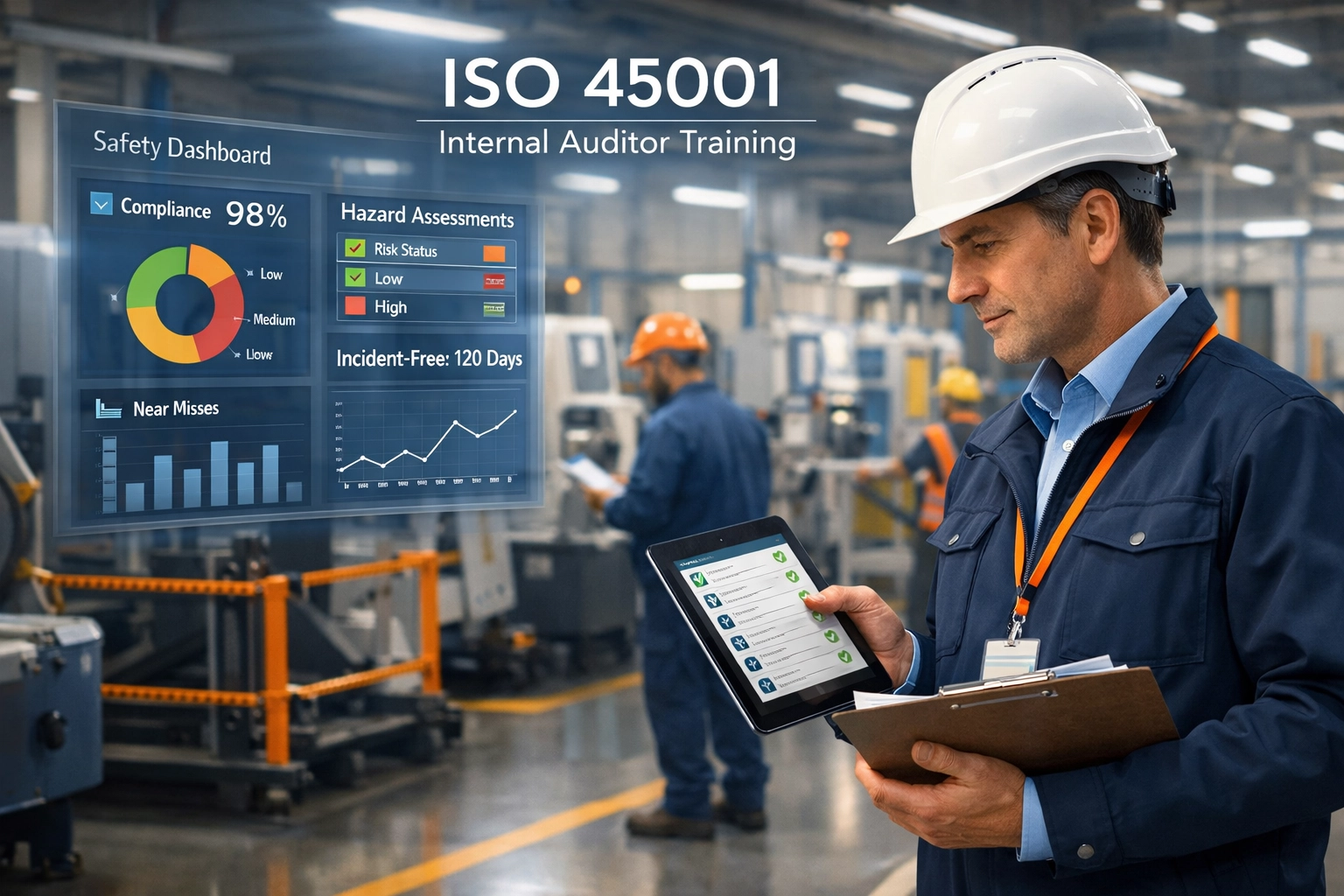
One of the most valuable qualifications in this field is the ISO 45001 Lead Auditor Course. This internationally recognized training program equips professionals with the knowledge and skills required to audit Occupational Health and Safety Management Systems (OHSMS) against ISO 45001 requirements.
The ISO 45001 Lead Auditor Course is designed for safety managers, quality professionals, consultants, compliance officers, internal auditors, and individuals seeking career growth in occupational health and safety. By completing this course, professionals learn how to plan, conduct, report, and manage audits effectively while helping organizations improve workplace safety performance.
In this article, we explore the benefits, course structure, career opportunities, implementation trends, and the growing importance of the ISO 45001 Lead Auditor Course in today's business environment.
What is an ISO 45001 Lead Auditor Course?
The ISO 45001 Lead Auditor Course is a professional training program that teaches participants how to conduct audits of Occupational Health and Safety Management Systems based on ISO 45001 standards.
The course typically covers:
ISO 45001 requirements
Audit principles and methodologies
Risk-based thinking
Occupational health and safety controls
Audit planning techniques
Interviewing skills
Audit reporting
Corrective action verification
Continuous improvement processes
The primary objective of the ISO 45001 Lead Auditor Course is to develop competent auditors who can evaluate workplace safety management systems and identify opportunities for improvement.
Organizations increasingly rely on certified lead auditors to ensure compliance, reduce risks, and maintain certification requirements.
Benefits of Taking an ISO 45001 Lead Auditor Course
Gain Internationally Recognized Credentials
One of the biggest advantages of enrolling in an ISO 45001 Lead Auditor Course is obtaining an internationally respected qualification.
Certified professionals are recognized worldwide for their expertise in occupational health and safety auditing. This recognition can significantly enhance professional credibility and career prospects.
Many employers actively seek candidates who have successfully completed an ISO 45001 Lead Auditor Course because they possess specialized auditing knowledge.
Improve Occupational Health and Safety Knowledge
The course provides a comprehensive understanding of workplace safety management systems.
Participants learn:
Hazard identification techniques
Risk assessment methods
Incident investigation procedures
Legal compliance requirements
Safety performance evaluation
These skills help professionals contribute effectively to workplace safety initiatives.
Enhance Career Opportunities
Completing an ISO 45001 Lead Auditor Course opens the door to various career opportunities.
Common job roles include:
Lead Auditor
Internal Auditor
Occupational Health and Safety Manager
Compliance Officer
EHS Consultant
Safety Coordinator
Certification Auditor
As organizations continue prioritizing workplace safety, demand for qualified auditors remains strong across industries.
Increase Earning Potential
Professionals with lead auditor qualifications often enjoy higher salaries compared to non-certified peers.
The specialized expertise gained through an ISO 45001 Lead Auditor Course makes professionals valuable assets to employers seeking compliance and safety management expertise.
Develop Practical Auditing Skills
The course combines theory with practical exercises.
Participants gain hands-on experience through:
Audit simulations
Case studies
Group activities
Role-playing exercises
Real-world audit scenarios
This practical approach helps candidates build confidence in conducting audits effectively.
Key Topics Covered in an ISO 45001 Lead Auditor Course
Understanding ISO 45001 Requirements
Participants learn the structure and requirements of ISO 45001, including leadership responsibilities, risk management, operational controls, and performance evaluation.
A strong understanding of the standard forms the foundation of successful auditing.
Audit Planning and Preparation
Effective audits require careful planning.
The ISO 45001 Lead Auditor Course teaches participants how to:
Define audit objectives
Develop audit plans
Allocate resources
Review documentation
Prepare audit checklists
Proper preparation improves audit effectiveness and efficiency.
Conducting Audit Interviews
Interviewing skills are essential for auditors.
Participants learn how to:
Gather objective evidence
Ask effective questions
Evaluate responses
Build professional relationships
Strong communication skills contribute significantly to audit success.
Reporting Audit Findings
Auditors must clearly communicate their observations and findings.
The course covers:
Nonconformity identification
Audit report preparation
Evidence documentation
Corrective action recommendations
Accurate reporting helps organizations address gaps and improve performance.
Follow-Up and Corrective Action Verification
The auditing process does not end with the audit report.
Participants learn how to verify corrective actions and evaluate the effectiveness of improvement initiatives.
Emerging Trends Driving Demand for ISO 45001 Lead Auditor Course
Growing Focus on ESG Performance
Environmental, Social, and Governance (ESG) initiatives have become important business priorities.
The "Social" aspect of ESG focuses heavily on employee health and safety.
Organizations increasingly require professionals trained through an ISO 45001 Lead Auditor Course to assess workplace safety performance and support ESG objectives.
Digital Health and Safety Management Systems
Technology is transforming workplace safety management.
Organizations now use:
Mobile safety applications
Cloud-based compliance platforms
Digital inspection systems
Automated reporting tools
Auditors must understand these technologies to effectively evaluate modern safety management systems.
Mental Health and Employee Well-Being
Organizations increasingly recognize that workplace safety includes mental health and psychological well-being.
The ISO 45001 Lead Auditor Course helps professionals evaluate programs addressing stress management, employee wellness, and workplace culture.
Remote and Hybrid Work Safety
Remote work environments introduce new health and safety challenges.
Organizations need auditors capable of evaluating:
Home office ergonomics
Remote worker safety programs
Employee well-being initiatives
Risk management controls
This trend continues to increase demand for qualified auditors.
Supply Chain Safety Requirements
Global organizations increasingly require suppliers to maintain robust occupational health and safety practices.
Certified lead auditors help evaluate supplier compliance and support responsible supply chain management.
Industries That Benefit from ISO 45001 Lead Auditor Course
Professionals completing an ISO 45001 Lead Auditor Course can work across multiple sectors.
These industries include:
Manufacturing
Manufacturers require safety auditors to reduce workplace risks and maintain compliance.
Construction
Construction projects involve significant occupational hazards that require effective auditing and risk management.
Healthcare
Healthcare facilities use occupational health and safety systems to protect employees and patients.
Logistics and Transportation
Transportation companies rely on safety management systems to improve operational reliability.
Energy and Utilities
Energy organizations require qualified auditors to assess high-risk operations and safety controls.
Conclusion
The ISO 45001 Lead Auditor Course is one of the most valuable professional development programs for individuals seeking careers in occupational health and safety management. The course provides internationally recognized qualifications, practical auditing skills, and comprehensive knowledge of workplace safety systems.
As organizations continue prioritizing employee well-being, regulatory compliance, ESG performance, and risk management, the demand for qualified lead auditors will continue to grow. Professionals who complete an ISO 45001 Lead Auditor Course gain the expertise needed to support safer workplaces, improve organizational performance, and advance their careers.
Investing in an ISO 45001 Lead Auditor Course is a strategic step toward becoming a trusted occupational health and safety professional in today's competitive global marketplace.









Write a comment ...