Introduction
Environmental sustainability has become a top priority for organizations across India. With increasing environmental regulations, customer expectations, ESG (Environmental, Social, and Governance) initiatives, and global supply chain requirements, businesses are adopting internationally recognized environmental management practices. ISO 14001 certification in India has emerged as one of the most trusted standards for organizations seeking to improve environmental performance while maintaining operational efficiency.
From manufacturing industries and construction companies to IT firms, hospitals, logistics providers, and educational institutions, organizations are implementing ISO 14001 to reduce waste, conserve natural resources, and ensure regulatory compliance. In 2026, sustainability reporting, carbon footprint reduction, and green business practices are becoming major competitive advantages, making ISO 14001 certification in India more valuable than ever.
This guide explains everything businesses need to know about ISO 14001 certification in India, including its benefits, certification process, current industry trends, and why organizations are investing in environmental management systems.
1. What is ISO 14001 Certification in India?
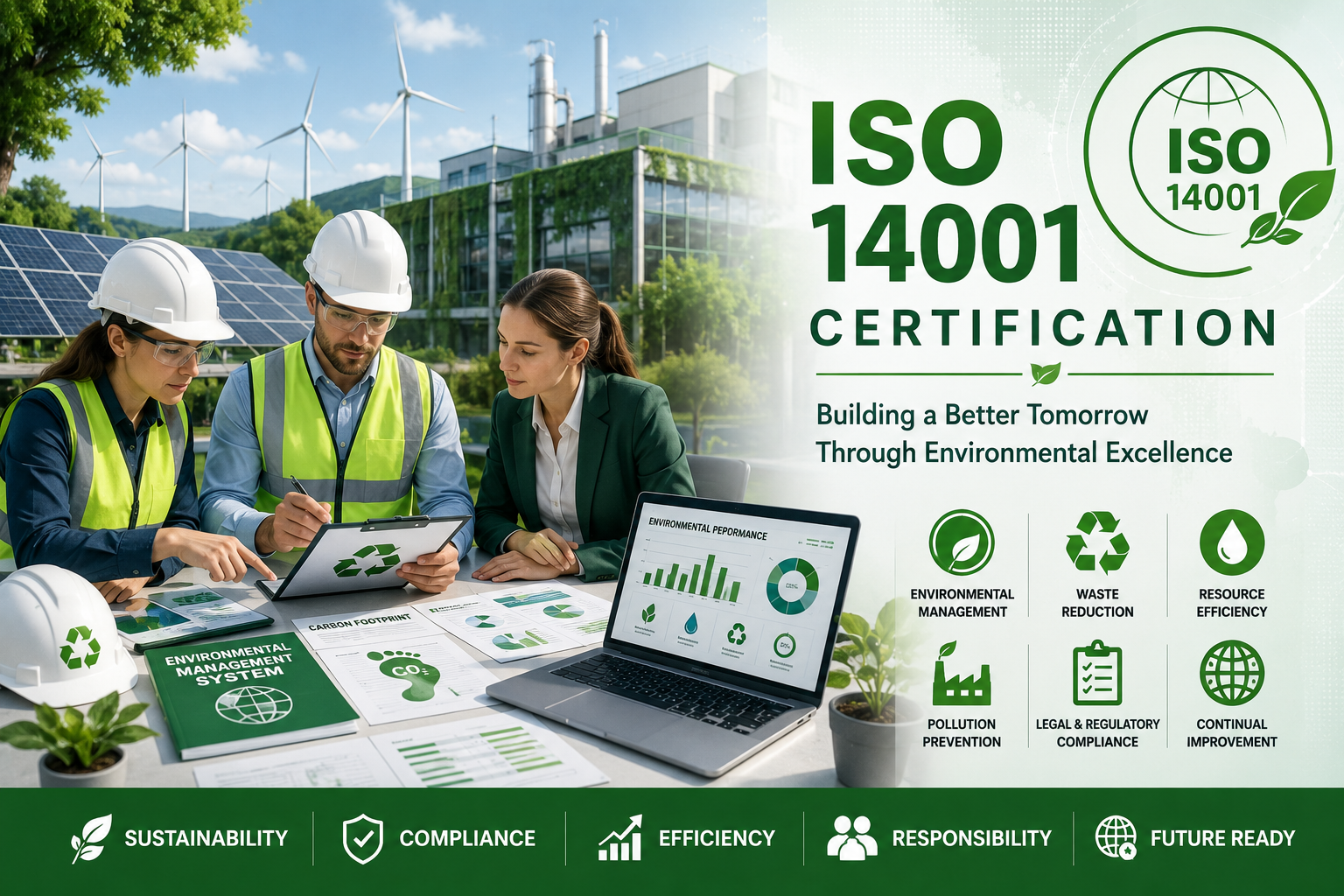
ISO 14001 certification in India is an internationally recognized certification that verifies an organization's Environmental Management System (EMS) complies with ISO 14001 requirements. Developed by the International Organization for Standardization (ISO), this standard helps businesses identify environmental impacts, reduce pollution, improve resource utilization, and comply with applicable legal requirements.
The certification applies to organizations of every size and industry, including:
Manufacturing industries
Construction companies
Healthcare organizations
Information technology companies
Food processing industries
Logistics providers
Educational institutions
Chemical industries
Engineering firms
Unlike product certification, ISO 14001 certification in India focuses on improving organizational processes that influence environmental performance.
2. Benefits of ISO 14001 Certification in India for Businesses
Implementing ISO 14001 certification in India offers numerous business and environmental advantages.
Improved Environmental Performance
Organizations systematically reduce waste generation, emissions, energy consumption, and environmental risks.
Regulatory Compliance
Businesses can identify environmental regulations more effectively and reduce the risk of legal penalties.
Cost Savings
Efficient use of water, electricity, fuel, and raw materials helps lower operational expenses.
Enhanced Corporate Reputation
Customers increasingly prefer environmentally responsible organizations, making ISO 14001 certification in India a valuable trust indicator.
Better Risk Management
The Environmental Management System helps organizations identify environmental hazards before they become serious issues.
Increased Business Opportunities
Many multinational corporations and government tenders require suppliers to possess ISO 14001 certification in India, creating new business opportunities.
3. Step-by-Step Process for ISO 14001 Certification in India
Organizations typically follow these steps to achieve ISO 14001 certification in India.
Step 1: Environmental Assessment
Identify environmental aspects, impacts, risks, and legal obligations.
Step 2: Develop an Environmental Management System
Create policies, objectives, procedures, operational controls, and monitoring processes.
Step 3: Employee Training
Employees receive awareness training regarding environmental responsibilities and compliance requirements.
Step 4: Internal Audit
Conduct internal audits to evaluate whether the Environmental Management System is functioning effectively.
Step 5: Management Review
Senior management reviews audit findings and approves improvement actions.
Step 6: Certification Audit
An accredited certification body performs Stage 1 and Stage 2 audits before issuing ISO 14001 certification in India.
4. Latest Trends Driving ISO 14001 Certification in India in 2026
The demand for ISO 14001 certification in India continues to grow due to several emerging trends.
ESG Compliance
Investors increasingly evaluate Environmental, Social, and Governance performance. ISO 14001 supports ESG reporting by strengthening environmental management.
Carbon Footprint Reduction
Indian organizations are implementing carbon reduction initiatives aligned with national sustainability goals.
Green Supply Chains
Global manufacturers prefer environmentally certified suppliers, making ISO 14001 certification in India a competitive requirement.
Digital Environmental Management
Cloud-based monitoring systems, IoT sensors, AI-powered analytics, and automated reporting are transforming environmental management practices.
Circular Economy Practices
Businesses are focusing on recycling, waste reduction, resource recovery, and sustainable production processes to support circular economy initiatives.
These trends demonstrate why ISO 14001 certification in India is becoming an essential investment rather than simply a compliance requirement.
5. Who Should Obtain ISO 14001 Certification in India?
Almost every organization can benefit from ISO 14001 certification in India, especially those with significant environmental impacts.
Suitable organizations include:
Manufacturing companies
Pharmaceutical industries
Chemical manufacturers
Construction contractors
Mining companies
Automotive suppliers
Packaging industries
Food processing companies
Hospitals
Educational institutions
Warehousing and logistics companies
Government organizations
Export-oriented businesses
Renewable energy companies
Small and medium-sized enterprises (SMEs) are also increasingly pursuing ISO 14001 certification in India to improve competitiveness and meet customer expectations.
Conclusion
Environmental responsibility has become a strategic business priority rather than simply a regulatory obligation. ISO 14001 certification in India enables organizations to establish a structured Environmental Management System that improves sustainability, reduces operational risks, enhances legal compliance, and strengthens market credibility.
As businesses increasingly focus on ESG goals, carbon neutrality, green supply chains, and resource efficiency, the demand for ISO 14001 certification in India will continue to grow throughout 2026 and beyond. Organizations that implement ISO 14001 not only contribute to environmental protection but also gain long-term business advantages through improved efficiency, stronger customer confidence, and greater access to domestic and international markets.
For companies seeking sustainable growth, regulatory compliance, and enhanced corporate reputation, ISO 14001 certification in India remains one of the most valuable international certifications available today.









Write a comment ...