Introduction
A lead auditor course in Coimbatore can help professionals develop the knowledge and practical skills required to plan, conduct, report, and follow up management-system audits. Coimbatore's strong presence in engineering, manufacturing, textiles, automotive components, healthcare, food processing, and technology creates demand for professionals who understand quality, environmental, occupational safety, information security, and other ISO management systems.
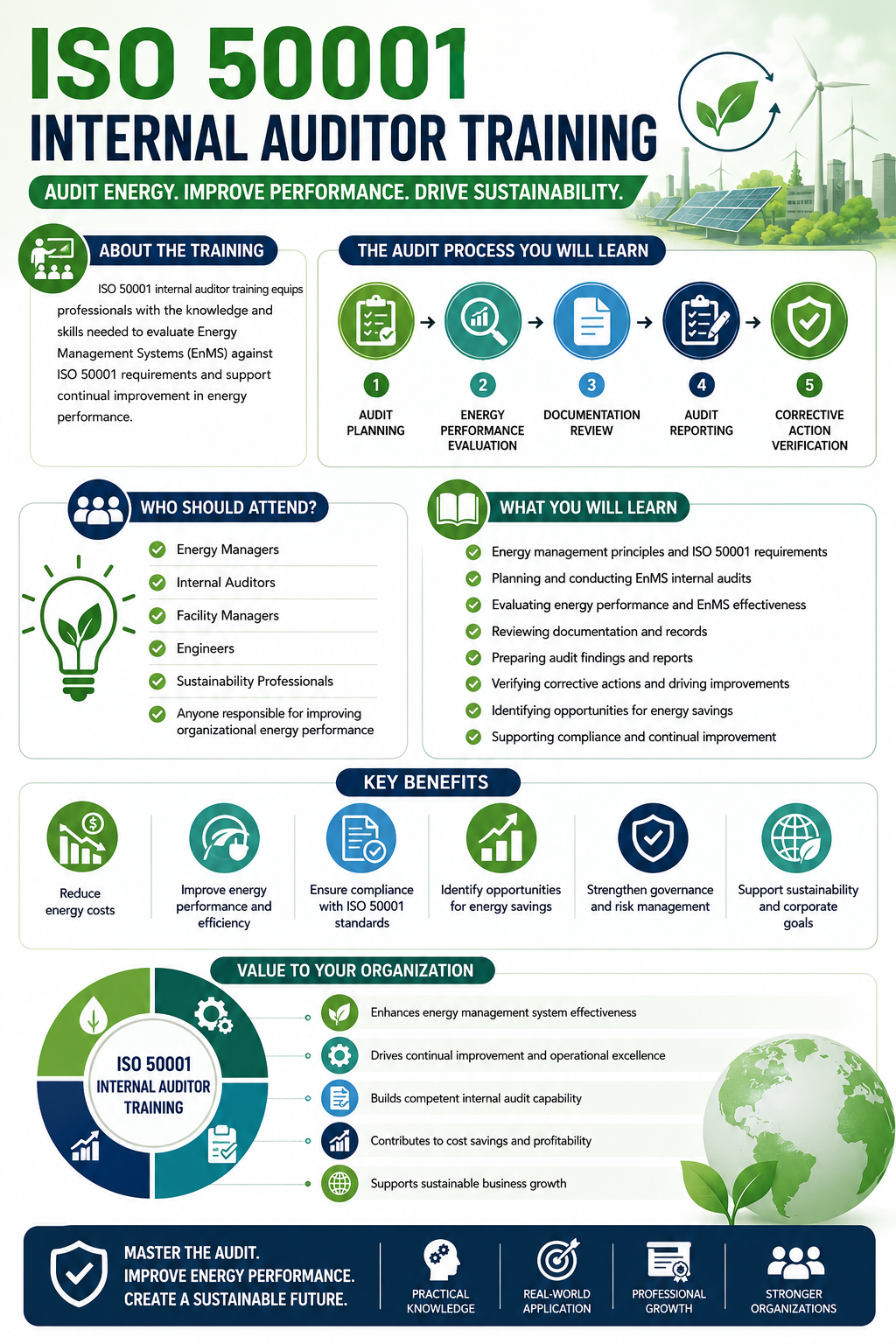
In 2026, lead-auditor training is increasingly focused on practical auditing, risk-based thinking, sustainability, digital transformation, and integrated management systems. Training providers are also offering classroom programmes in Coimbatore; for example, current 2026 schedules include ISO 50001 lead-auditor training in the city.
1. What Is a Lead Auditor Course in Coimbatore?
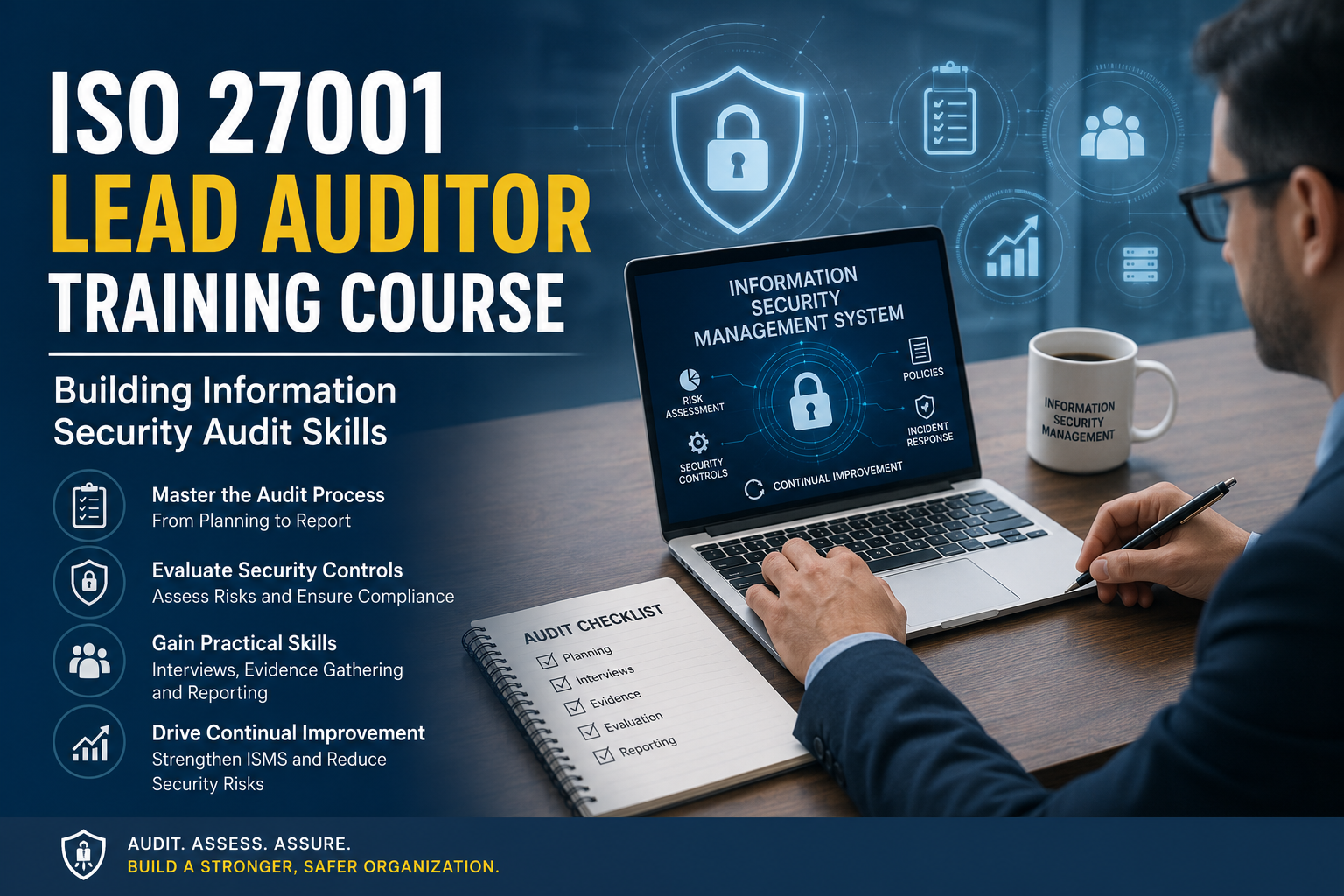
A lead auditor course in Coimbatore is a professional training programme that teaches participants how to manage and conduct audits against a specific ISO management-system standard. Depending on the course, participants may train for ISO 9001, ISO 14001, ISO 45001, ISO 27001, ISO 22000, ISO 50001, or other standards.
Unlike basic awareness training, lead-auditor programmes focus on the complete audit process. Participants learn how to establish audit objectives and scope, prepare an audit plan, coordinate an audit team, collect objective evidence, evaluate findings, prepare reports, and verify corrective actions.
Many recognized lead-auditor programmes are structured around ISO 19011 auditing principles and the requirements of the relevant management-system standard. Current lead-auditor programmes can include practical exercises covering audit planning, conducting audits, reporting, and follow-up.
2. Key Skills You Gain from Lead Auditor Training
A quality lead auditor course in Coimbatore should develop both technical understanding and practical auditing competence. Participants learn how to interpret standard requirements from an auditor's perspective rather than simply memorizing clauses.
Important skills include audit programme management, risk-based auditing, interviewing, sampling, evidence collection, process evaluation, nonconformity identification, corrective-action assessment, and audit reporting.
Practical training is particularly valuable because real audits require professionals to make decisions based on evidence. Participants should ideally practice developing audit checklists, conducting simulated interviews, identifying findings, and writing clear nonconformity statements.
This practical approach is increasingly important because organizations want auditors who can evaluate whether a management system is effective, not simply whether documents are available.
3. Benefits of a Lead Auditor Course in Coimbatore
Completing a lead auditor course in Coimbatore can benefit professionals working in quality assurance, production, compliance, engineering, environmental management, occupational health and safety, information security, and consulting.
For individuals, the training can strengthen professional credibility and expand opportunities across industries. A professional with lead-auditing knowledge can participate in internal audits, supplier audits, second-party assessments, and other management-system activities, depending on their experience and applicable certification requirements.
For organizations, trained auditors can provide valuable insight into process weaknesses, recurring nonconformities, operational risks, and opportunities for continual improvement. Effective auditing can also help organizations prepare for external certification and surveillance audits.
Coimbatore's industrial ecosystem makes these skills particularly relevant to manufacturing and engineering organizations that operate complex production and supply-chain processes.
4. Lead Auditor Training Trends in Coimbatore in 2026
The demand for lead auditor course in Coimbatore is increasingly connected with emerging business priorities. Organizations are looking beyond traditional quality compliance and focusing on sustainability, energy efficiency, cybersecurity, business continuity, supply-chain resilience, and integrated management systems.
Digital transformation is also changing how audits are performed. Auditors increasingly encounter electronic records, automated monitoring systems, cloud platforms, digital dashboards, and remote audit activities. This requires stronger skills in evaluating digital evidence and understanding how technology supports management-system controls.
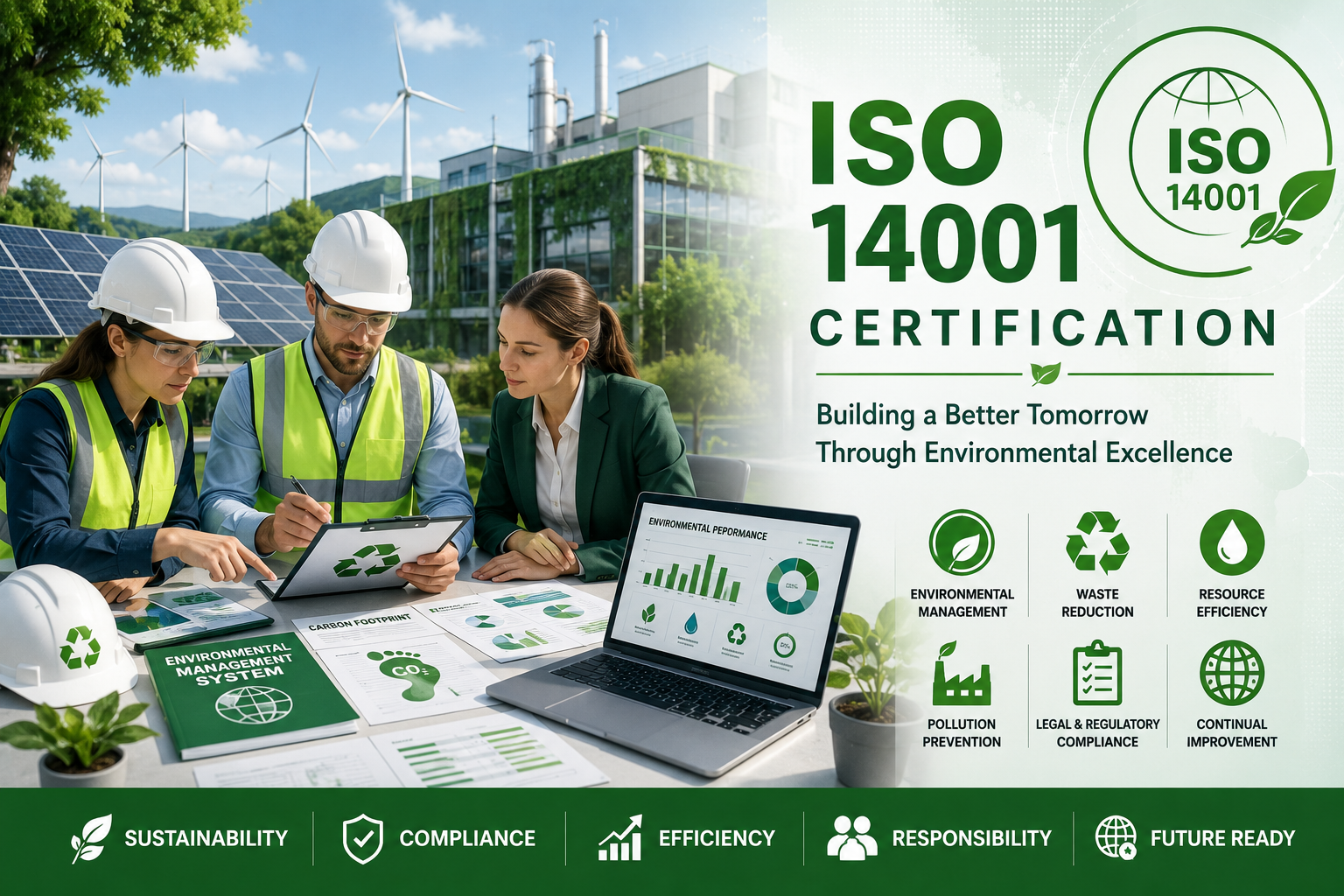
Environmental and sustainability considerations are particularly relevant in 2026. Updated management-system requirements are placing greater attention on environmental performance, climate-related considerations, risks, opportunities, and organizational context. Current ISO 14001:2026 lead-auditor programmes, for example, emphasize strategic environmental risks, compliance, leadership, management of change, and continual improvement.
5. How to Choose the Best Lead Auditor Course in Coimbatore
Before enrolling in a lead auditor course in Coimbatore, professionals should identify the ISO standard most relevant to their career or industry. They should then evaluate the training provider's recognition, trainer experience, course duration, examination structure, practical exercises, and certification arrangements.
A strong programme should use the current edition of the applicable standard and provide realistic audit scenarios. Learners should look for training that covers audit planning, evidence evaluation, interviewing, nonconformity reporting, corrective actions, and audit-team management.
It is also useful to compare classroom and online options based on learning preferences. Current training schedules show that Coimbatore is included in classroom programmes for several ISO disciplines, providing local professionals with opportunities to develop specialized auditing skills without necessarily travelling to major metropolitan cities.
Conclusion
A lead auditor course in Coimbatore can be a valuable professional development opportunity for people seeking stronger auditing, compliance, quality, safety, environmental, or information-security skills. As organizations increasingly focus on risk, sustainability, digital transformation, and continual improvement, competent auditors can contribute significantly to management-system effectiveness.
The best approach is to select training that combines the relevant ISO standard with recognized auditing principles, experienced trainers, practical exercises, and current industry requirements. Developing practical auditing competence—not simply obtaining a course certificate—can help professionals create greater value for their organizations and advance their careers in 2026.





Write a comment ...